
A lack of economic growth, rising numbers of insolvencies and increasing unemployment – for several years now the country has found itself in the grip of a prolonged economic crisis. Many companies face the challenge of maintaining their economic viability while simultaneously securing the trust previously established in their role as employers over many years. Transformation is the order of the day, but what exactly needs to happen to make such transformation sustainably successful?
We talk to Georg C. Scheiber, Partner and Director of Customer Relations at von Rundstedt, a leading consultancy specialising in strategic HR transformation in Germany.
What precisely is the role of von Rundstedt in terms of driving forward the individual transformation of a company?
A successful transformation begins with the goal, the objective. We have to understand where the company, in the mid- to long term, is strategically heading for. As soon as that’s clear we help to align the company’s workforce with it – at both management and operational levels. I could also say: we implement the corporate strategy at workforce level. At the heart of what we do is motivating people to undergo the necessary changes.
That sounds reasonably simple.
But isn’t it often the case these days
that the aim is to rationalise jobs,
downsize workforces or even
completely shut down specific
business divisions?
There are diverse reasons behind the current pressure towards transformation, and with highly varying consequences for the company: what direction is the market heading in? Is the business model changing? Is the company in financial difficulties, or is there a risk of insolvency? In the end, and for everyone involved, it’s always a matter of change. It is no secret though that for both managers and employees this change could also involve looking for a new job. It’s why we always understand such situations as a holistic challenge.
In a nutshell: we make sure that people view a change of career as an opportunity. That’s no easy task, but it can be achieved if we think not just in the short term but in the mid- to long term as well.
What’s the difference between short-term, necessary job cuts and genuinely sustainable transformation?
The best way to understand that difference is to look back, from the future so to speak. A workforce reduction carried out at short notice – even if it’s been carefully negotiated through co-determination – generally undermines employees’ trust in their employer, and in many cases it can more fundamentally damage that relationship. However, this trust is always the result of years, if not decades, of work. Restoring that level of trust, for example once the crisis is over, often costs more than implementing the necessary workforce reduction programme in the first place. That’s why we always point to both the short-term and the mid- to long-term implications. A truly sustainable transformation takes these aspects into account and includes programmes for everyone involved: for those that stay as well as those that leave. With a transformation our aim is to always ensure that, after everything has settled down, all parties involved can still look each other in the eye.
Why do some
transformations fail?
More often than not, transformations fail due to bad communication and a lack of leadership, especially at the middle management level. Based on our experience, companies nowadays are generally well equipped to develop strategies that are fit for the future. There is also a wealth of external expertise available for the implementation of change programmes, particularly from employment law specialists, which is coupled with an awareness within companies of the importance of bringing them on board at an early stage. One aspect that is still underestimated though is communication – internally and externally. The same is true concerning the expertise needed to convincingly take the lead in such change situations, which are often far-reaching.
What mistakes are being made here?
This brings us full circle to my answer to the first question: what’s decisive is the target that the change measures are intended to achieve. This target has to be plausibly explained through communication tailored to specific audiences, and through leadership behaviour that fits the objective as well as the measures. It’s not just about describing which measures have to be implemented – far more important is a plausible description of the causes and objectives. Communication, leadership and transformation management have to work in unison here, otherwise the risk of failure is high.
What advice would you give
to companies that find themselves
in transformation situations?
The chance of success with transformation processes increases disproportionately with the time horizon taken by the company’s management: how does the transformation have to be designed and structured so that it will be seen as a successful milestone in the company’s history in five to ten years’ time? If that line of thought is complied with, there’s much to be gained by everyone involved.
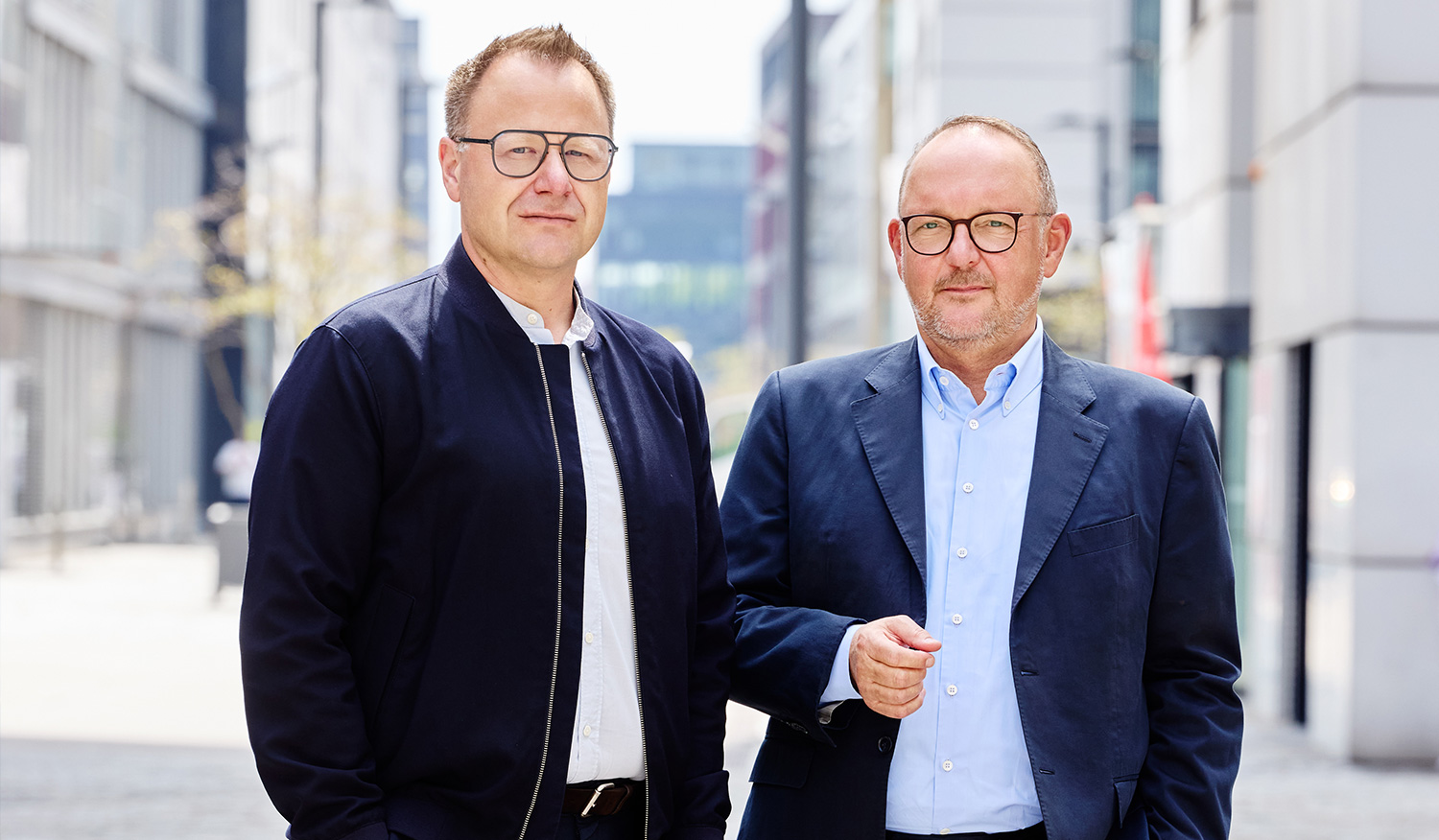
Georg C. Schreiber has been a partner and Director of Customer Relations at von Rundstedt since 2016. Together with his team he supports and advises companies and works councils across the regions of Franconia, the Upper Palatinate, Thuringia and Brandenburg, Germany on strategic issues relating to workforce reduction and restructuring.
rundstedt.de
Jens Petershagen has been a consultant specialising in strategic corporate communications and reputation management for over 25 years. With his team he advises the management of internationally active companies on transformation processes, particularly sensitive situations and crises.